

Credit: Al Jazeera
New European Broadcasting Standards Spark Discussions
Published: Wednesday, July 15, 2026
by Madeline Fournier
On June 8th, the European Broadcasting Union released a 23-page document outlining the best ways to respectfully cover an athlete during a broadcast. Although this was released over a month ago, it has recently sparked backlash online due to the protective nature towards women that the document possesses. The document was written by Elsa Arapi, Clair Goodwin, Hannah England, and Christel Saneh from the EBU, with input from athletes like Holly Bradshaw, Ivana Španović, and Blanka Vlašić. These guidelines were created to help prevent some of the compromising camera angles and slow-motion replays that can often be seen in women’s sports broadcasting, specifically focusing on track and field.
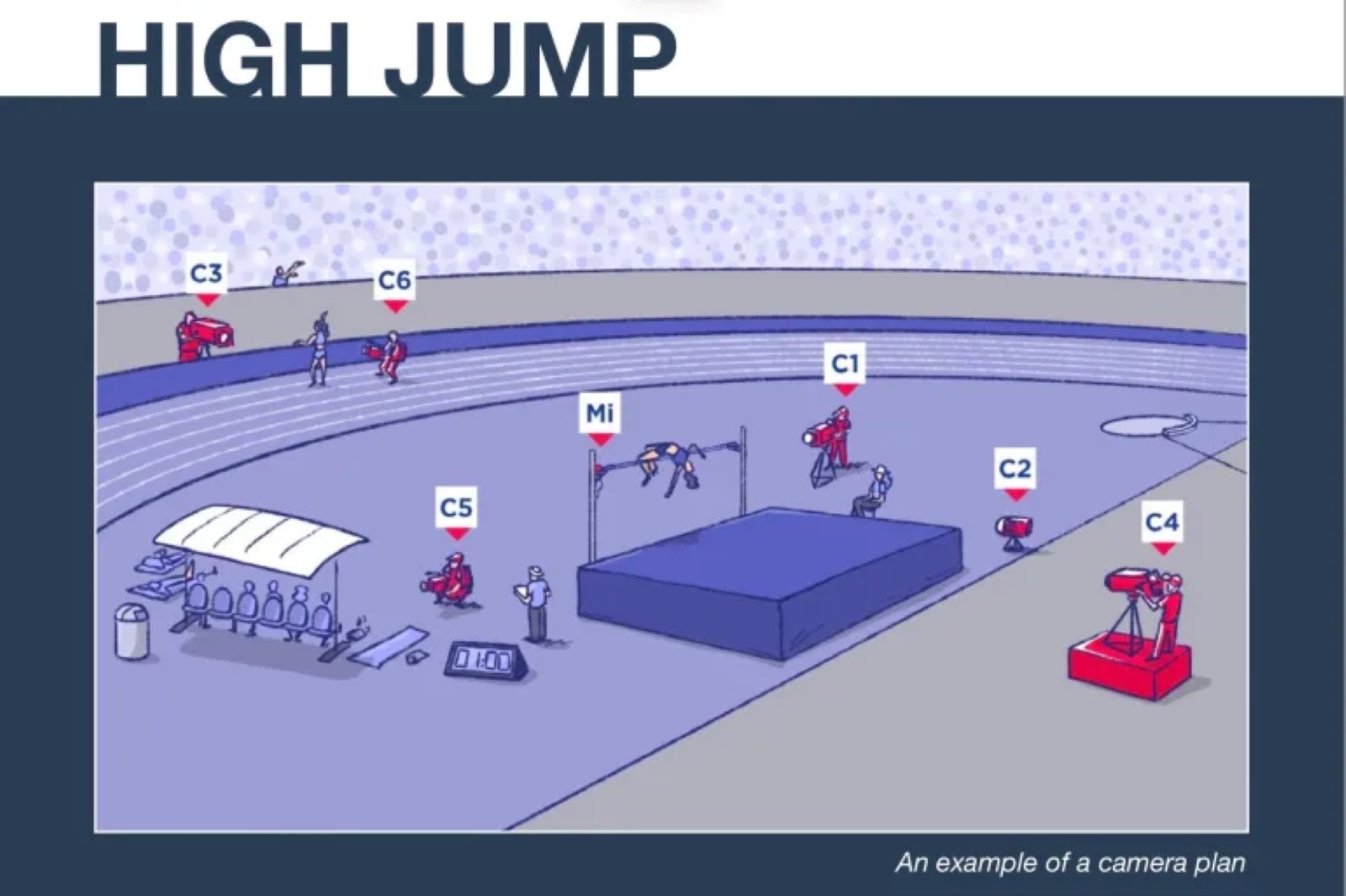
This document contains cartoon drawings of appropriate and inappropriate camera angles
that can be used in sports such as high jump, pole vault, horizontal jumps, and running
events. There are multiple pages focused on each sport with multiple drawings of “positive”
and “negative” camera angles, including commentary from the athletes who worked on
the guidelines with the EBU about the different ways that camera angles and slow-motion
replays can benefit a broadcast and showcase the technical skill and strength that
come with each event. Some “negative” camera angles described in the guidelines are
those that film from below a jumping athlete or on the backside of an athlete instead
of using “positive” angles like those from the side or aerial shots of an athlete
performing an event. Athletes like Holly Bradshaw say in the document that she has
seen "inappropriate videos online of [herself] and colleagues when slow-motion content
of us competing is captured."
This seems perfectly normal, and even like a step in the right direction. However,
these new guidelines have recently gained traction online and are causing some backlash.
These guidelines were created to help reduce the sexualization that female athletes
receive online and sometimes in the broadcasts themselves. However, some people online
are bashing the new guidelines, saying that viewership would decline without the inappropriate
camera angles, or they blame the issue on the women’s uniforms.
Despite the backlash over the new guidelines, they stand to benefit female athletes
beyond just those being broadcast by the EBU for track and field. Since guidelines
like these are being implemented by a group that is so influential in the broadcasting
world, they stand to impact other broadcasting groups across the world. If the guidelines
prove to be positive, they could become standard in other countries beyond Europe
and could impact the broadcasting for events like the Olympics. Changes in the way
that women’s sports are broadcast could change the way that female athletes are perceived
by the general public and help lead women’s sports closer to equality to their male
counterparts.
For more information reach out to Madeline Fournier at madeline.fournier@student.shu.edu
Posted in: news,