

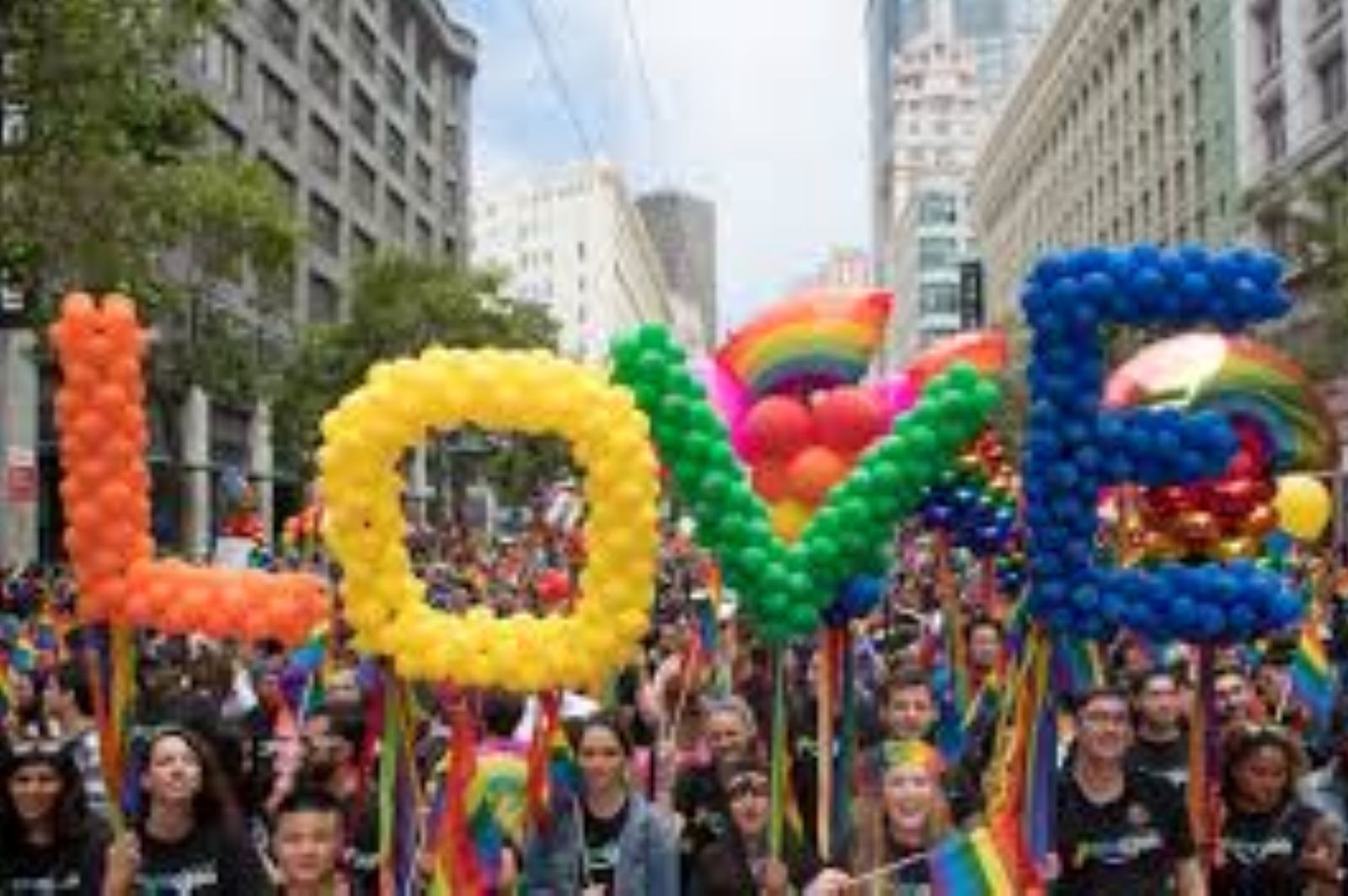
Credit: CNN
An Overview on Pride Month
Published: Tuesday, June 2, 2026
by Liam Page
June is Pride Month in America. Pride Month began in 1970 as recognition of the Stonewall Uprising in 1969. The Stonewall Uprising began after a police raid on the Stonewall Inn, a gay bar in New York City. Police raids on gay establishments were common at the time, and the resistance to this raid sparked several days of protests. Since then the LGBTQ+ community has used the month of June as remembering discrimination, protesting ongoing discrimination, and reclaiming the history of LGBTQ+ individuals.
It is only in the very recent history of America that LGBTQ+ has been seen in a majority positive light. For only around 50 years homosexuality has not been considered a mental disease. Less than 40 years ago, many Americans wrongly associated HIV/AIDS almost exclusively with gay men. 30 years ago marriage was defined as one man and one woman. 20 years ago LGBT issues found themselves at the presidential level of discourse and only about 10 years ago same sex marriage was declared legal in all 50 states.
Discrimination against the LGBTQ+ community is a majority of the American story, but today the Pride community is flourishing more than ever. However, the Pride community seems to have more internal strife than external. As the Pride movement has become more comprehensive, the movement has been struggling to act as one unified movement. Bisexuals are often called "not gay enough" and white, cis, and conservative members of LGBTQ+ are considered less than other members and traitors to the movement. There have also been isolated movements along the trans and cis divide where tensions arise.
This division in the last 5 or so years has led to many mixed messages and factions
that preach very different messages that what the Pride movement was built on. Radical
ideas from the LGBTQ+ community come under attack from right wing and religious groups
and are treated as the ideas of the whole movement when they may not be the ideas
of all. Ultimately if the Pride movement will continue to exist it will be out of
inclusiveness and acceptance rather than structuring the cause based on how dedicated
you are to the cause.
LGBTQ+ members are still in the minority in America. Only 9.3% of people in the U.S. identify as a part of LGBTQ+. That means for ideas to become mainstream it generally takes a large majority of allies to support LGBTQ+ movements. Therefore it is counterproductive to exclude people because they don't align with the most extreme identification of LGBTQ+.
Several major companies have reduced Pride Month marketing campaigns in recent years. Some have attributed this to consumer backlash, while others point to broader economic and political considerations. Additionally, LGBTQ+ ideas have gotten so entrenched with mainstream democrat policies that it is now and easy target for republicans and is overwhelmingly partisan. This hurts the movement when congress and the president are republican. The movement cant grow if they have to pause every 4-8 years, legislatively.
Where the LGBTQ+ movement has fallen flat in recent years is trying to be the normal. LGBTQ+ members have spent so much of American and world history as outcasts, and that sentiment is still felt by many in the community. However they are still a minority of people so when they push certain ideologies too hard they ostracize themselves as what they believe is not in the majority consensus. As Americans we are all endowed with unalienable rights and we are all entitled to our own opinions, but toleration goes both ways. You can't expect to be accepted and not accept others.
The Pride movement began as a safe place for people who didn't feel safe. Now it has become divided against itself for what truly matters most. June is a pulse check for the Pride movement. It is a time to remember the roots of the movement and also look forward.
For more information reach out to Liam Page at liam.page@student.shu.edu
Posted in: news,