

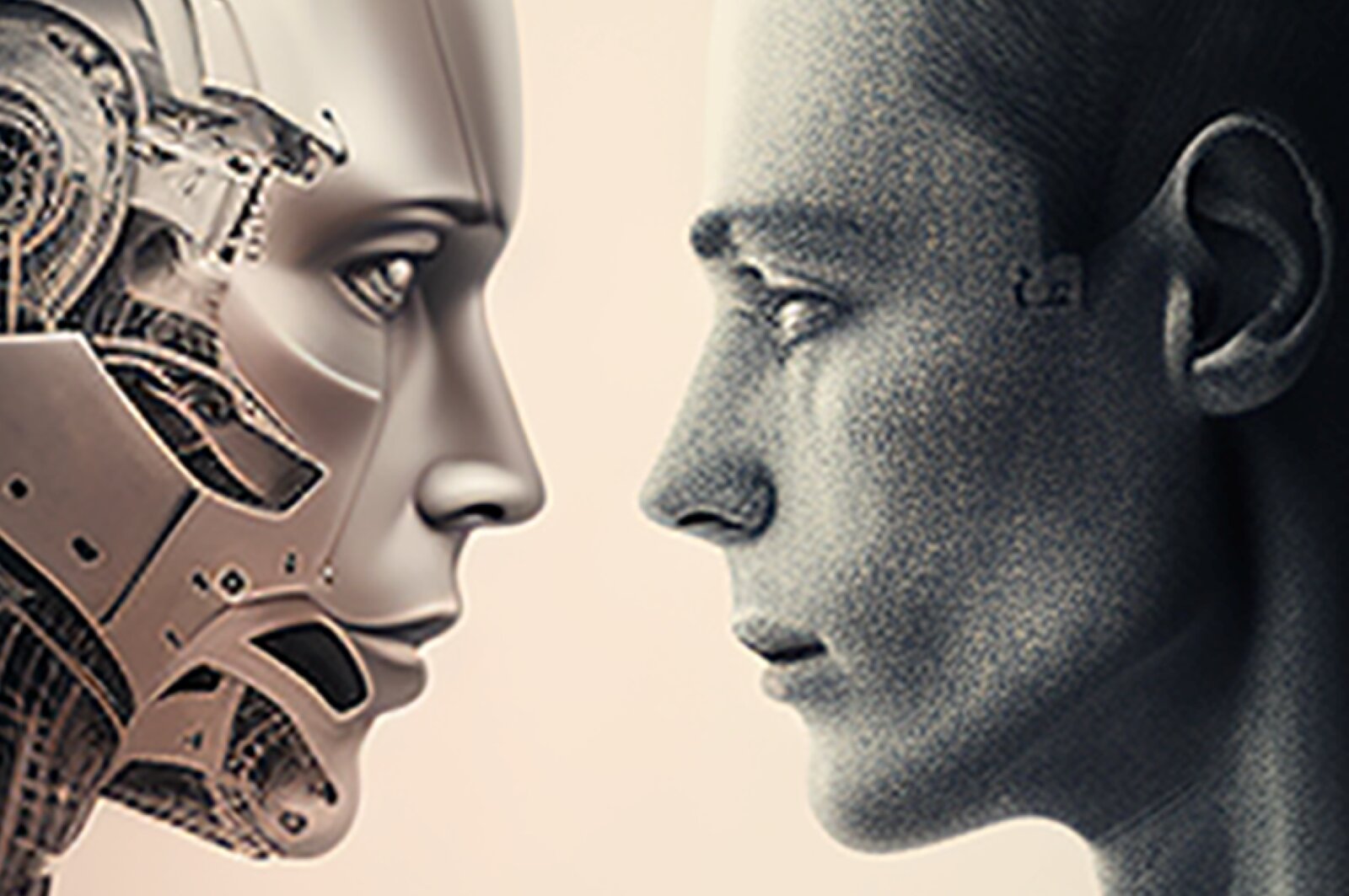
Credit: TechRadar
Artist vs. AI: The Moral Devaluation of the Art Industry
Published: Thursday, June 4, 2026
by Paulina Borkowski
Over the past years, digital artists and their respective communities have voiced their frustrations with generative AI in their respective crafts. Generative AI creates art, writing, and whatever humans ask for with the prompt feature. AI requires large datasets, and the program subsequently creates an image based on them. This creates pushback in the artist's communities. It has legal, economic, and cultural consequences for the art field. The key issue here is where the data for generative art comes from.
The majority of these images are sourced from the internet. Whether it’s a selfie or digital art, it can and will be taken and used to fuel these datasets. In terms of Digital Art, any artist who spends their time and labor making art pieces can be used for AI and is often a paid system. As a result, there are legal consequences such as copyright infringement. Digital artists legally own the art they create regardless of shares and reproductions. As a result, there are concerns that digital artists' work is being taken without consent and used to fuel AI companies’ profit. The concern here is some artists are unaware of AI companies stealing & using their work. This sparks conversations within the community about larger media companies and their ability to protect themselves, leaving small artists vulnerable.
Another issue stemming from people using AI for art. Workers are being replaced and
letting the machine take care of it can work for a bit but leads to long-term loss.
If AI companies do not mind the moral implications of taking an artist's work, companies
may also find more distrust from their customers. Digital artists can rework old logos
and spark up new visuals better. To the AI, it has done its job, but to any customer,
those flawed designs may lead them to view the overall product poorly, deterring them
from taking their business there. The "Handmade Effect" shows people prefer products
made by people. If a company can’t hire artists to create the first impression customers
have with a product, then what does that mean for the rest of the production process?
As many disregard Digital art as a simpler version of other art forms such as traditional paintings and sculptures, they are connected by humanity. I don’t mean just human hands working on an art piece; I mean the emotional energy put into making art pieces. It's why we recognize the effort in art pieces and in each stroke, digital or physical. When you look at an art piece made by someone, you see a glimpse into their mind. When you take that emotional experience and you industrialize it in mass-produced AI images, there is an art piece made in technical terms; the machine did produce what you had prompted it to, but is it really “art” if it lacks emotional depth? Machines do not have emotions; this is proven by the fact that AI art does not tell you anything about itself. Despite the thousands of lines of code and the various images taken from real artists, it cannot reflect even one single feeling from its creator.
I believe that AI digital art does not bring much to the table compared to human work.
It’s a fad that will eventually burst from its own hunger; the constant pushback and
the unmentioned environmental costs will prove that these generative AI systems will,
eventually, fall from their grace. This statement against AI is not to express full
hatred towards any form of AI. Multiple types provide aid to humans rather than a
crutch. In digital art, a variety of tools that countless artists use are powered
by AI, such as stabilizers to help turn shaky lines into smooth ones, and more.
I believe those who create AI should focus their effort on being a tool for artists
rather than to replace the idea of artists. There can always be coexistence; we just
have to realize that the current system of generative AI does not provide that coexistence.
After all, what you prefer: a burger made from a machine, or one made from a human
with feelings and emotions? You’d be surprised at what one subconsciously picks!
For more information reach out to Paulina Borkowski at paulina.borkowski@student.shu.edu
Posted in: news,